







Paul McCartney keeps pushing forward while looking back at The Boys of Dungeon Lane
By NICK TAVARES
STATIC and FEEDBACK Editor
It’s hard not to start counting the years and letting time overwhelm everything around it.
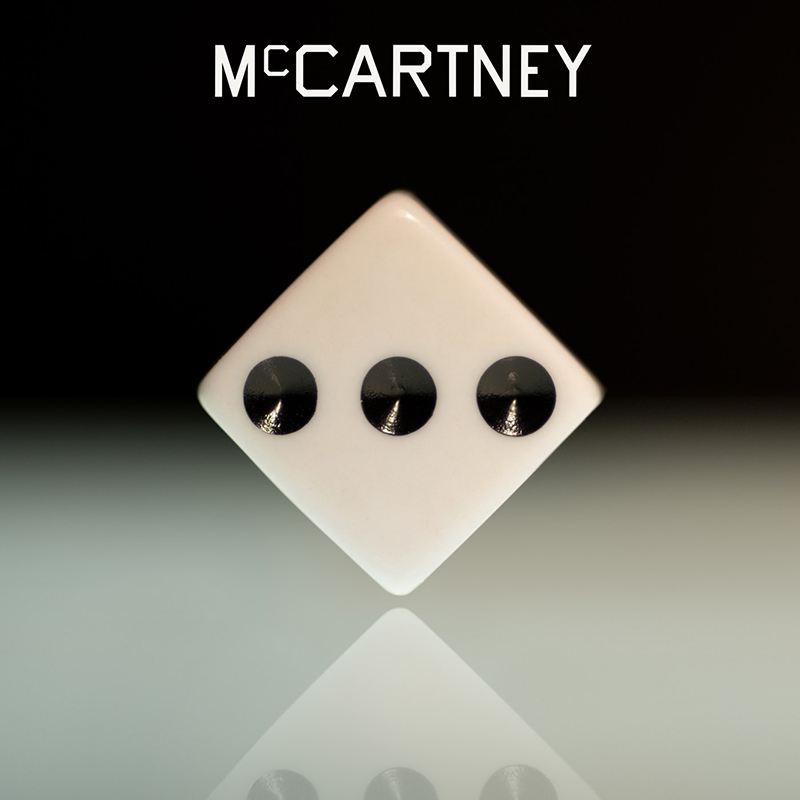
Take, for instance, the fact that it’s been 56 years since Paul McCartney released his eponymous McCartney album, homespun and brilliant as it was. Then add in another decade, factoring in that whole phenomenon of having been a key driver in the most influential band in popular music before that. It’s an astounding life and body of work to process.
All of that is carried into The Boys of Dungeon Lane, McCartney’s latest album, by the listener and the artist himself. And somehow, against the odds and at this advanced age, he has managed to log yet another masterwork that stands up to his ridiculously high standard.
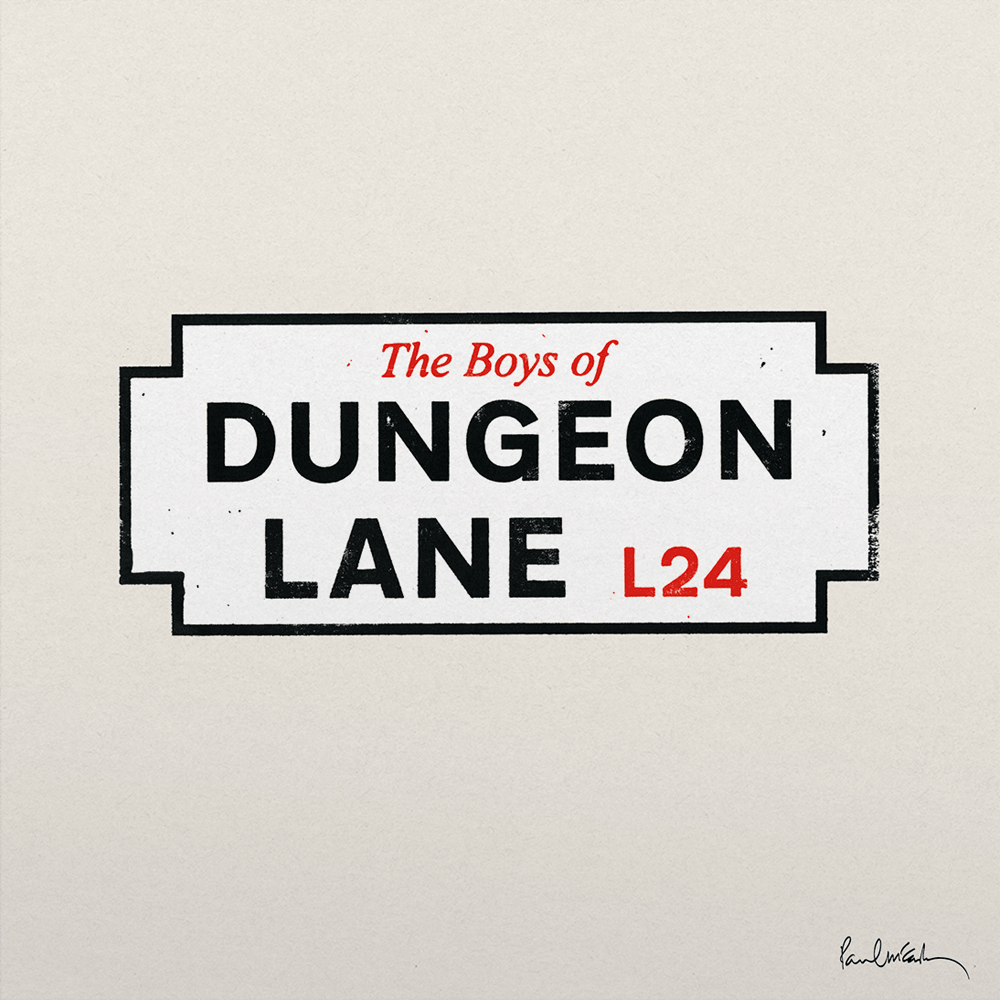
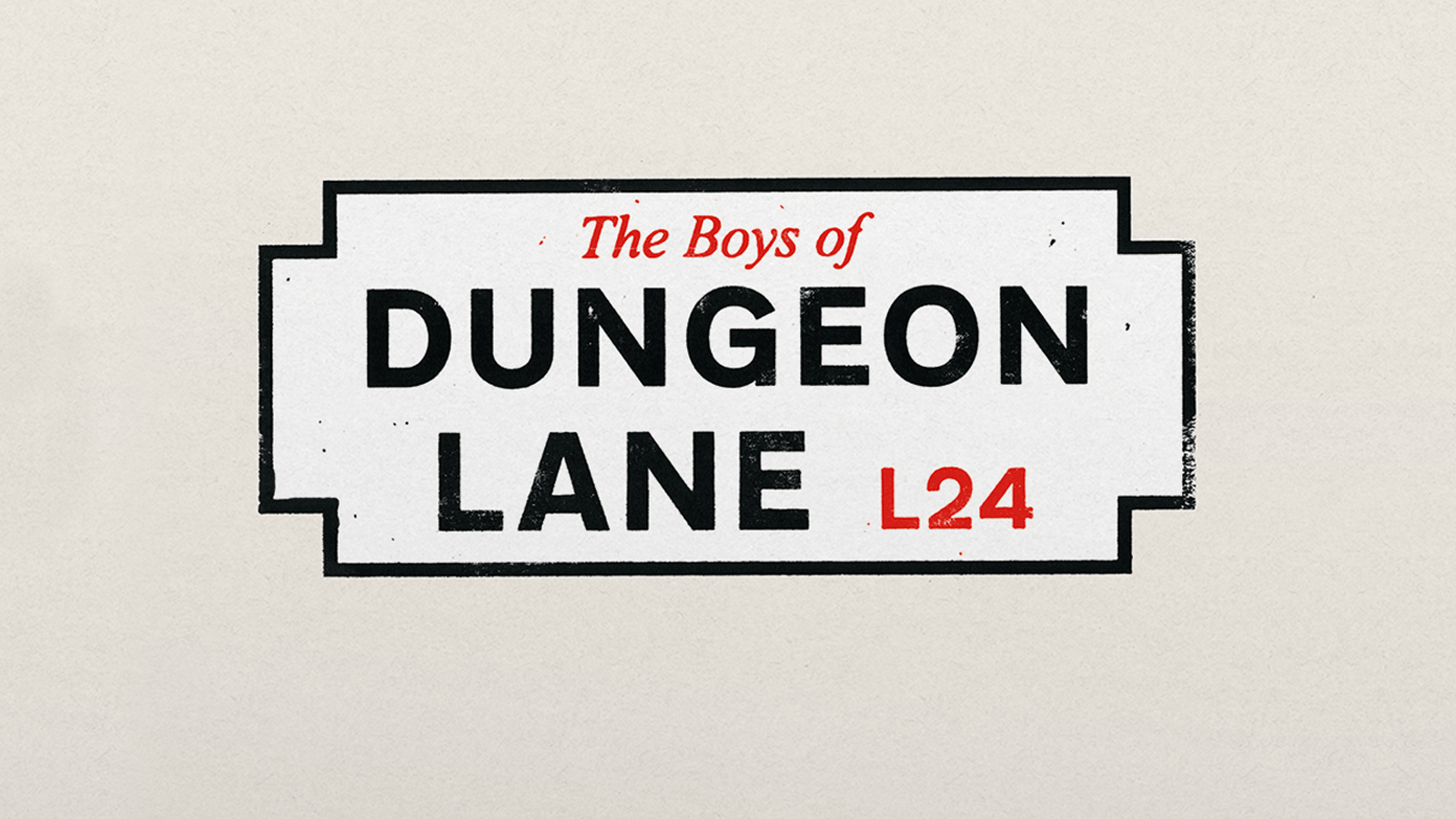
It’s obvious that McCartney is looking back with a focus that even his more nostalgic records, like Flaming Pie or Chaos and Creation in the Backyard, haven’t quite managed. From the lyrical content to the performances to the artwork — a stylized Liverpool street sign, with screen-printed collages of him and his Beatles mates in their pre-fame years — the album is a conscious reflection at the time before his vault to fame. Even the running order, clocking in at exactly 14 songs, chimes back to the mantra of early Beatles records, which always included 14 tracks that hadn’t already been parsed out on the singles.
With all that, plus the release of the lead single “Days We Left Behind,” an almost dream-like reflection on everyone here and gone, the expectation was that this might be a kind of acoustic-lead exercise, stripped down to the bare essentials as McCartney ruminated on his life and work.
Instead, that’s almost immediately upended by the opening “As You Lie There,” as ambitious a track as he’s attempted in years. The opening narration struck me the same way Ray Davies’ spoken word passage does in the Kinks’ “Come Dancing,” his own sentimental look back at an earlier time, the harshness of its particular reality softened by the years.
And then it takes the most absurd of turns, veering into a suddenly pleading vocal before spinning around again and going into a full-on heavy chorus, the kind of heavy near-progressive change-of-pace he used to employ in Wings’ more adventurous moments. The abrupt twists don’t end there, and it all becomes a brazen sonic pastiche. For all the talk of this merely being a nostalgic trip through his many roads, this is as daring and gripping as anything he’s done in my lifetime.
He treads all these lanes with grace, juggling the old and the new throughout The Boys of Dungeon Lane. The production somehow walks the line of feeling warm, modern and true to the artist’s best work, another victory in Andrew Watt’s winning streak which also includes late-career triumphs by the Rolling Stones, Pearl Jam and Ozzy Osbourne. There are plenty of McCartney tropes, like the harpsichord in “Mountain Top” or his signature driving rhythms on “Lost Horizon.” But none of these feel stale or stock. They’re all in service to the songs, and it’s obvious that he has a tremendous amount of pride in the works presented here.
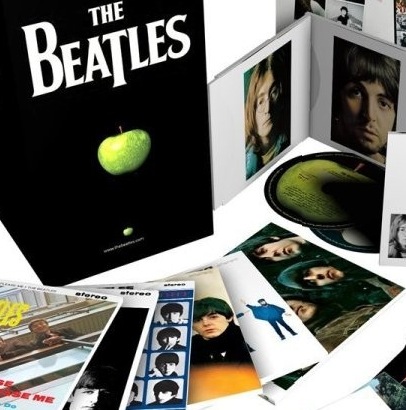
With the remastered Anthology project and all the recent Beatles films, McCartney’s time with the Beatles has been front of mind, and that’s reflected here. The old adage goes that you can’t have a Beatles solo album without Ringo Starr, and he shares the mic with his former time keeper on “Home to Us.” Funny enough, the charming age in McCartney’s voice and Starr’s trademark inflection are more closely aligned than they’ve ever been, tonally matching each other on the track. He reflects on his Beatles bandmates George Harrison and John Lennon on “Down South” and “Days We Left Behind,” and on other, unnamed loves on “We Two.” There are emotionally heavy moments as well, too, as on “Momma Gets By” and its story of a mother providing for her children while their father is checked out. Whatever the circumstances that led him to that, she carries on.
But beyond the sounds or the window dressing (or even the backwards tape loop running at the end of “We Too”), it’s the sense of the songs, living in their most organic state, that gives this album the right to be considered alongside all those great moments within and without his famous band.
And it’s a moment in time. It’s an opportunity to reflect, to look forward, to see what else can be accomplished in the space provided here. It’s not necessarily crafted as an attempt to get back to the top of the charts or to upend whatever else might be considered relevant in pop, but it is another chance to listen to a master at work, one who is clearly motivated to deliver work that’s worthy of his unparalleled career. Instead of simply counting down the years, he’s decided to add another chapter to an unmatched legacy.
E-mail Nick Tavares at nick@staticandfeedback.com